
The platform is selected. The contract is signed. Leadership is aligned. And then, somewhere between kickoff and go-live, things start to unravel.
Data doesn’t map cleanly. Billing reconciliation surfaces errors that weren’t visible in testing. Policy records arrive out of sequence. What was supposed to be a final QA checkpoint becomes a triage exercise. Timelines slip, costs climb, and the promised operational continuity starts to feel like a stretch goal.
This is not a rare story. Insurance system conversions fail, or significantly underperform, with uncomfortable frequency. And in nearly every case, the platform itself is not the culprit.
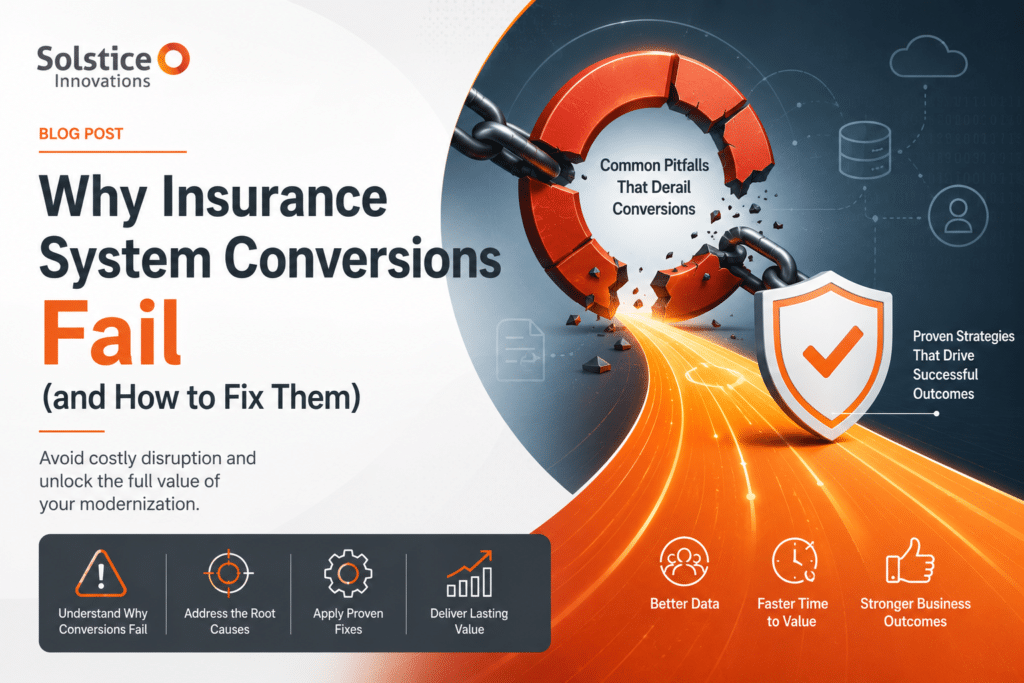
Across complex conversions in NFIP, private flood, homeowners, and other insurance product portfolios, failure patterns are consistent and fall into four categories.
Data migration that underestimates legacy complexity. Every carrier has years of accumulated policy data across legacy systems with inconsistent field mapping, non-standard codes, and historical exceptions that were never cleaned up. Without structured mapping protocols and validation checkpoints built in from the start, data integrity issues surface post-conversion, making them far more expensive to resolve.
Financial misalignment that compounds over time. When policy records migrate without proper billing reconciliation, discrepancies are initially invisible. They surface in the first renewal cycle, or when an endorsement triggers a recalculation against incorrect base data. By then, the conversion team has moved on, and the carrier is holding the problem.
Workflow disruption from shallow configuration. Modern platforms are highly configurable. That’s a strength that becomes a risk when configuration decisions are made without genuine operational knowledge of how carrier teams actually work. Post-launch, adoption stalls, workarounds multiply, and the efficiency gains that justified investment start to evaporate.
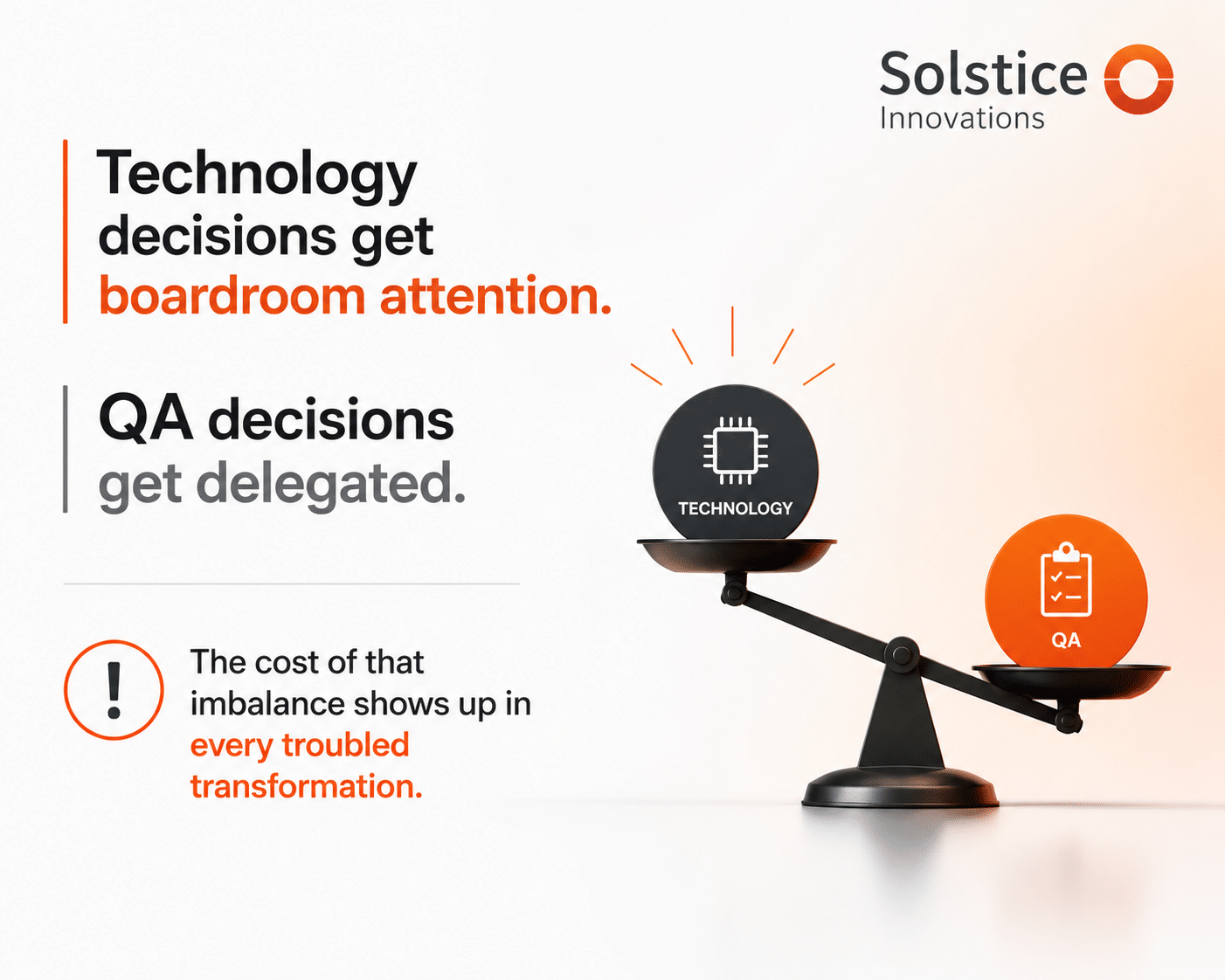
QA that asks the wrong question. Most QA processes validate whether the platform functions correctly. That’s necessary. The more important question is whether the converted data produces correct outcomes for this specific carrier’s book of business across its actual policy types, billing arrangements, and exception patterns. Generic frameworks, applied by teams unfamiliar with the carrier’s operations, consistently miss that gap.
As carriers move to AI-native platforms, a new failure mode has emerged that previous generations of system conversion never faced.
Agentic AI systems are only as reliable as the data they operate on. A conversion that migrates policy records accurately but fails to preserve the data relationships and historical context that AI agents depend on will produce unreliable outputs from day one. At speed. At scale.
Validating AI output quality on converted data is a new category of QA requirement that most conversion frameworks haven’t caught up with. Carriers moving to agentic platforms need partners who have.
The carriers that convert successfully share a consistent pattern. They treat data preparation as a pre-conversion workstream, not a migration task. They run parallel billing environments through at least one full renewal cycle. They configure workflows around how their teams actually operate. And they apply QA frameworks specific to their book of business, not generic test scripts borrowed from the platform vendor.
They also ask the right questions before signing:
Vague answers are a risk signal.
The Solstice and Coforge partnership announced in April 2026 was built around exactly these requirements. Coforge’s Conversion Center of Excellence brings structured methodology, dedicated QA engineering, and insurance domain expertise to every implementation, including the AI-readiness validation that modern platforms demand.
Agentic AI adds another layer of value when applied within governed delivery models.
Examples include:
AI works best as an execution accelerator inside defined processes, supported by human oversight and accountability.
Contact the Solstice team to start a transformation conversation.
This post was written with the assistance of AI.
Solstice Innovations is not affiliated with the U.S. government or any federal flood or P&C insurance program. We are committed to protecting your privacy, as detailed in our Privacy Policy and Terms of Use. Solstice.tech is operated by Solstice Innovations LLC, a licensed brokerage specializing in flood and P&C insurance.